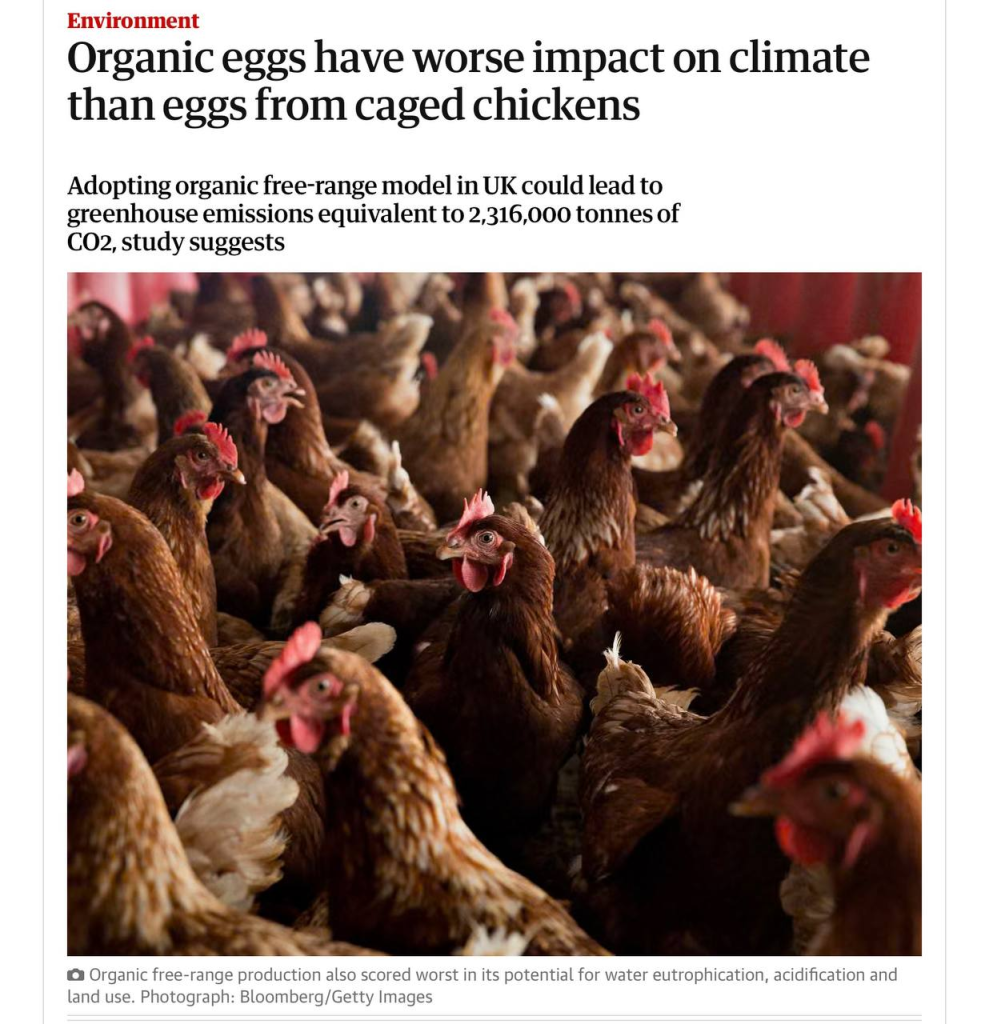
Animal welfare must be a right wing issue. The left has abandoned it and is actively using various ideologies to promote animal suffering. I have seen the climate agenda ideology used several times in recent years to justify cruel factory farming! These sick people put diversity and tolerance of violent Islam above protection of animals.
Northern Europeans have historically been the most compassionate toward animals of any world culture. We must double down on it now. If we lower ourselves to the standards of savages, we are no better than savages.
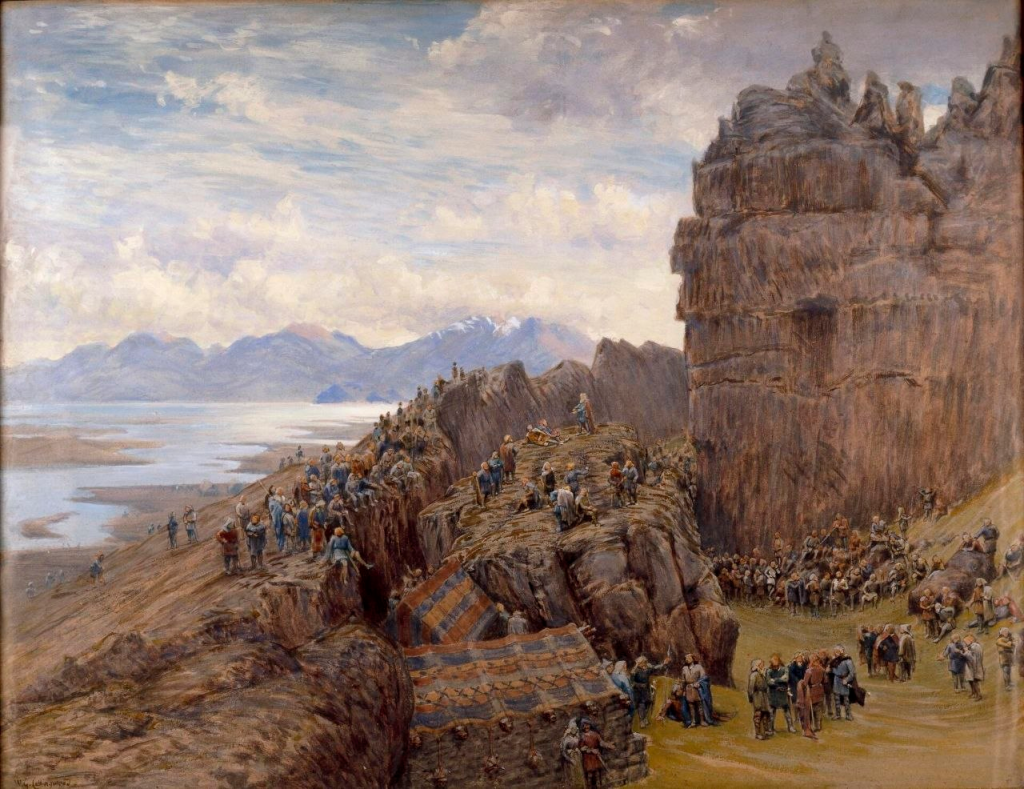
The Alþing at Þingvellir Artist: William Gershom Collingwood (1854–1932)
Among the Germanic peoples, law was one of the foundations of society. It protected the community, settled disputes, and defined the responsibilities expected of every free person. Keeping your word, honoring your oaths, supporting your kin, and living according to the customs of the community were not simply personal virtues. They were part of what it meant to live within the law.
Some crimes were punished by one of the harshest penalties in the Germanic world: outlawry. The Icelandic law code Grágás describes the sentence in plain terms. A person declared a full outlaw (skóggangr) lost the protection of the law and was required to leave Iceland. Anyone who remained after the time allowed could be killed without paying compensation. Grettis saga shows what that sentence looked like in practice. After being declared an outlaw, Grettir Ásmundarson spent years living in isolation, hunted, and cut off from the legal protections every free person once possessed.
The same respect for the law even appears in the legendary traditions. In Gesta Danorum, Saxo Grammaticus recounts that Odin was driven from Ásgarð after violating Rindr, and Ullr ruled in his place until Odin’s return. Saxo wrote centuries after the conversion and interpreted older traditions through a Christian lens, but his account may preserve an earlier heathen tradition. Whether historical or legendary, the story reflects how seriously the Germanic peoples regarded the law and the consequences for violating it.
Outlawry was one of the harshest punishments in the Germanic world because it stripped a person of the rights and protections they once enjoyed as a member of the community. The surviving law codes and sagas show that law, honor, and accountability were inseparable in Germanic society. Those traditions helped hold their communities together, and they are still worth remembering today.
Roth Note: This video is self-evidently from the 50’s or 60’s before diversity was celebrated and racial mixing encouraged. Depending on one’s beliefs, this video is either absolutely racist and misguided, or it’s absolutely racialist, logically correct, and good for protecting the Folk. We have either turned a corned towards global kumbaya or we’re in the process of destroying the white race.
IRANIAN PROF EXPOSES THE PLAN: DESTROY THE U.S. ECONOMY WHILE TRUMP IS PRESIDENT
Iranian Professor Izadi just laid out the clearest statement yet of Tehran’s current thinking. After failed talks and repeated U.S. strikes, a growing number of voices inside Iran no longer believe… https://t.co/RgKUr5AR6tpic.twitter.com/QkG3k1s109
Trump fell into an Iranian plan in which he is now trapped. Both Iran and Israel win. The United States loses a war, its economy and its superpower standing.
Trump is currently conspiring with Netanyahu and Zelensky in Washington, D.C. Maybe he is not conspiring but receiving his orders from his masters.
What most people glossed over was the report that 150 US combat medics were deployed to Landstuhl Regional Medical Center in Germany. This was not an ordinary deployment, nor was it in anticipation of possible casualties from an impending military operation… These men and women were deployed to reinforce a badly stretched medical staff at Landstuhl that were trying to cope with dozens of badly wounded US military personnel that had survived the missile strikes on Muwafaq al-Salti airbase in Jordan and two army bases in Kuwait.
Based on the number of C-17 medical flights reported in open source that departed Jordan following the 17 July missile attack on Muwafaq al-Salti airbase and flew to Ramstein airbase in Germany, which is the entry port for the Landstuhl Medical Center, US casualties numbered over 100, perhaps higher. The large number of wounded may have been another factor contributing to President Trump’s decision to halt the bombing one week later.
Roth Note: No. They’re not covering anything up. We all know that our government would never lie to us (sarc).
Trump may now try to reinstate the MoU as it had been agreed six weeks ago. Iran will of course reject such a proposal. It will at least demand that the U.S. fulfills ALL clauses of the MoU down to the letter BEFORE it will reopen the Strait of Hormuz.
To get out of his current dilemma Trump will have to push Israel out of Lebanon. He will have to remove his forces from the Middle East and will have to pay out Iranian assets.
It is hardly conceivable that he will do any of this.
My current assumption is that Trump, under Israeli influence, will soon try for another military intervention. Only when that fails, as it is likely to do, will he finally be ready to concede defeat.
Roth Note: I suppose everyone has noticed that there seems to be an international effort to destroy the energy infrastructure and supply in many places all at once. Michael Yon is forecasting famine, pestilence, and (more) war. Take down the energy supply and what results? No fertilizer, no diesel fuel, no AV gas. Sad to say, sounds like Mr. Yon is onto something.
In 2016, the WEF released an Agenda 2030 video stating that "Western values will have been tested to their breaking point." This really bothered me and, ever since then, I've had this strong sense that my country is under attack.
Ben Crump is an attorney, he graduated law school, passed the Florida bar and has a net worth between $5 and $10 million. He barely can even read words aloud from a page. This should disturb you, our institutions have failed us, the pursuit of “equity“ is killing America. pic.twitter.com/XUX1jNQwKI
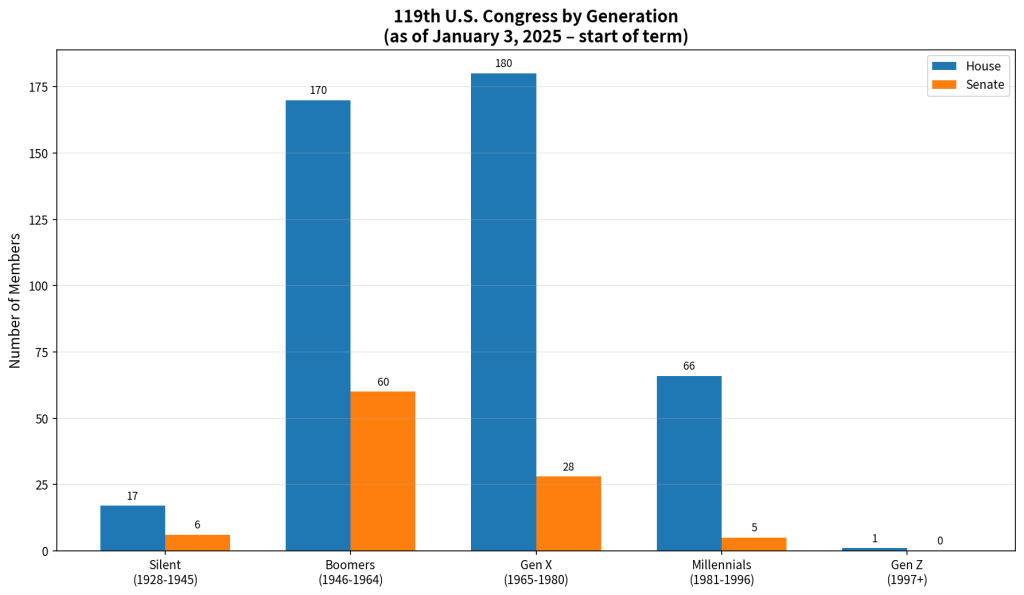
According to Grok, the Boomer Generation were born between 1946 and 1964. Roughly 76 million people were born in the U.S. during this period.
Let’s look at this generation in a different light: they grew up drinking water from a hose. Here is a list of other “traits” from this generation:
Playing outside until the streetlights came on — This was the common curfew. Kids left after breakfast or after school and stayed out for hours with minimal check-ins.
Being latchkey kids — Many returned home alone after school, wore a house key on a string around their neck, and occupied themselves until parents got home from work.
Roaming the neighborhood unsupervised — Exploring vacant lots, woods, creeks, or friends’ yards in mixed-age packs without adults tracking them.
Walking or biking to school (and elsewhere) alone — Often starting at a young age, without helmets or adult escorts.
Riding bikes without helmets — Helmets were rare or nonexistent for everyday riding.
Riding in cars with few safety measures — No (or rarely used) seatbelts, kids piled in the way-back of station wagons, or sitting in the front seat; car seats were not yet standard or required.
Entertaining themselves through unstructured play — Building forts, playing with sticks, inventing games, climbing trees, or dealing with boredom without screens or scheduled activities.
Limited media and technology — A few TV channels (often watched as a family), Saturday morning cartoons, rotary phones with long coiled cords, no internet or cell phones, and answering the home phone or front door themselves.
Everyday independence and responsibility — Doing chores as expected (not always for allowance), fixing minor problems themselves, and handling scraped knees or sibling disputes without constant adult intervention.
Other everyday norms of the era — Exposure to indoor cigarette smoke, sugary cereals and soda with little restriction, metal playground equipment that got hot in the sun, and PSAs like “It’s 10 p.m. — do you know where your children are?”
Our upbringing made us self-reliant and more aware of our surroundings. We did not have much in material wealth but we understood the concept of the American Dream. So we worked hard, were frugal and did not expect the “government” to help us succeed. We played in the sun and did not have “electronics” to turn us into screen sucking vampires. We became responsible adults and wanted our children to have the same values.
But the government and the educational system had other ideas. So now our children see a dark future with no hope for success. Our Western European white culture has been vilified and our “taxes” have been used to attack us and erase our founding principles.
In other words, the government won and the villains became the last generation of Western European descent who had a chance at the American Dream. There will always be people who are successful and who are greedy.
I started from nothing and built a successful business. I am not rich in terms of people who lived in the 1960s and 1970s. The government ensured that our “wealth” was excessively taxed and our monetary wealth degraded by inflation.
My parents did not leave me anything. My father once offered me $10,000 and I turned it down. I told him I was fine and he should keep it. He then asked me for some money and I asked how much he wanted. He did not answer me but the twinkle of pride in his eyes was a moment that I will never forget.
This newest division concerning the Boomers is just a fabrication. When I started out, being white was just becoming an impediment to a career. Being smart was a death blow as I found out. Fortunately, I found out early enough to understand that building a business was my best course of action for success.
My life lessons growing up gave me valuable experience and the hope of attaining the American Dream. It is not our fault that college tuition became a trap to enslave our future generations with debt. It is not our fault that government malfeasance gave us high inflation for expensive housing and automobiles.
What wealth I have will go to my children. That is my choice, not someone else who is basing my character on the year I was born. It is also my choice to expose people who judge other people based on characteristics, success and unfounded divisions. Should boomers be vilified for reasons that are not their business? If you want an answer, look at how the comments skewed off into tangents on this article.
Stop drinking the Kool-Aid and prepare for battle because war and famine are in our future.
Man with an America-themed hot dog catering business in North Carolina says he was BANNED from all Tractor Supply properties because he is a Trump supporter.
He used to feed the employees of the stores for FREE.
The one federal agency no one has even tried to reform is also the most powerful: CIA. Jim Erdman just resigned after a long career as an operations officer. He says the agency is completely out of control and dangerous.










Don’t overlook the fact that many people remain in poverty willingly so that they can claim welfare, ss benefits, and…