
There was once a very wise old man who traveled about – hills, mountains, valleys, and plains, all about – from one village to the next. He was tall and gaunt, had a patch over one eye, wore a floppy hat, and a long dark cloak that came down to his ankles. His beard was long and white. His boots were scuffed and worn from the many miles he had traversed and he carried a long hiking staff with a carved figure on the end. He had learned many things through his travels, by experience and reading, trial and error, and living long. He led a solitary life and one could say that he sacrificed himself to himself to gain wisdom.
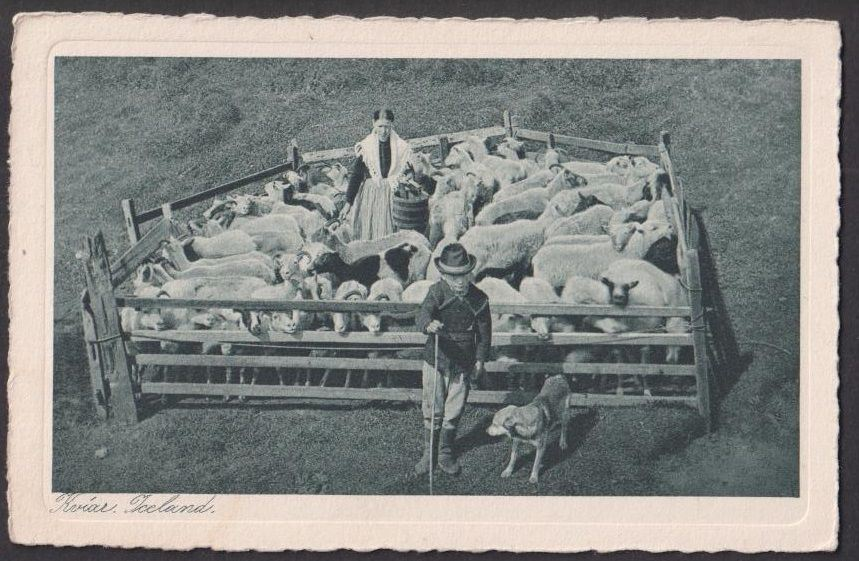
One day as he traveled the open plain, he happened upon a sheep pen with a young boy guarding the gate. Being tired and thirsty, he asked the lad for water and permission to sit and rest a while. The boy was intrigued by the look and bearing of the old man and obliged the old man’s request. The old man took a seat on a bench near the gate and accepted a gourd of water the boy handed him.
The boy was not used to anyone being about as he tended the flock since the sheep pen was so far from his village. Travelers were rare as was the opportunity to visit and talk with anyone other than the sheep. As the man drank the cool water the boy studied him. At length the boy asked what had happened to the old man’s eye that he should wear a patch over it. The old man just smiled and said, “Sometimes one has to sacrifice something to gain wisdom. It may be time in study, danger in a pilgrimage, or discomfort in a vision quest.” At this last the old man chuckled to himself.
As the boy continued to study the old man the old man asked, “So, boy, how long have you been tending your sheep?” The boy answered, “A few years, is all.” The old man asked, “Does tending the flock bore you? With no one to talk to and nothing to do but watch the sheep, what do you think about?” The boy considered for a while and then answered, “Well … I wonder … sometimes … if what they tell me is true.” The old man responded, “Who are the they of whom you speak?” “My parents, the other villagers, the priest … everybody,” he replied. “So what is it they tell you, boy?” the old man asked. “They say that our religion is the only true one, that all the others are evil and bad,” answered the boy.
The old man considered that for a bit and then said to the boy, “I see you have a fine flock of sheep in your pen. Are the sheep in your pen different than the sheep in the pen in the next village?” “Yes,” the boy replied, “these sheep are fatter and white in color. The ones in the next village are black, and because the forage there is sparse they are leaner.” “Is that so,” said the old man. “And which sheep, then, are better?” The boy said, “I’m not sure. I’ve not actually been to the pens in the other village, so I don’t really know. I know of their color and such from what my father told me.”
The old man then said to the boy, “Imagine your village as a sheep pen … a sheep pen of your religion … and you are a lamb in it. You want to know if what the other sheep in your pen tell you is true. So tell me, what religion, then, would the sheep in an Israeli sheep pen be?” “Oh, they would be Jewish,” answered the boy. “And those in India?” asked the old man. “That’s easy,” said the boy. “They would be Hindu.” “All right. What of America and Iraq and Thailand,” asked the old man. “America is mostly Christian, Iraq is Muslim, but I don’t know about Thailand,” responded the boy. “Well, you are correct about America and Iraq. Thailand is Buddhist,” said the old man. “And each of the sheep in those separate pens believe they have the one true religion, yes?” The boy nodded his agreement.
“You asked me how you know if what you have been taught in your sheep pen is correct and true, and I’ll answer your question with another question … how do you know the sheep in those other sheep pens are not true?” asked the old man. “How do you know that they’re evil and bad?” The boy thought about this for a long time. He struggled to come up with an answer. He had expected the old man to just give him one, but now he had to ponder. At length he tentatively responded, “I guess … I guess … maybe … I need to leave my sheep pen and visit the others?” “Very well,” said the old man. “How will that help you answer your question?” Again the boy thought long and hard. These things were so difficult for him to puzzle out. Finally he said, “I think I should ask them what they believe and why. I think I should live with them for a while so I can experience their ways. I think I should try to learn everything I can about them and their faith.”
The old man took another sip of the water, stood up and stretched. “So now, he said, “you have your answer. You must be open to everything. You must question everything. You must put your biases and prejudices away and consider the facts as you find them. You must form your judgment by way of rational, skeptical, and unbiased analysis and evaluation. In the end you may find that your villagers are correct, or you may find them in error, but you must do the work to find the answer. The boy thought about this and quickly saw the wisdom in it. As the old man picked up his staff and turned to leave the boy asked him one final question. “Sir, what sheep pen did you decide was the correct one. Which one did you choose?” The wise old man smiled and said, “None of them. I found one that’s just right for me and few others.” “How can that be,” asked the boy. “Aren’t you afraid people will think you daft, perhaps even shun you?” The old man’s smile grew even wider as he answered, “What little courage must a man have to allow others to tell him what to believe and what is true. How sad to allow oneself to be a slave to the masses. A man must do his best to learn the truth of things in a world filled with falsehood and illusions. No one else can do that for him.” And with that, the wise old man thanked the boy for the water, turned, adjusted his cloak, and continued his travels across the plain.
That night, after the sheep were secured in their pen, the boy left his village.
4 responses to “The Boy and the Sheep Pens”
The difference between the sheepfolds is apparent now for all to see. Judge them by their fruits and it is readily evident.
I wish I met that old man when I was a young lad,took me almost 60 years to realize I really know nothing.
That old man is Odin. 😉
[…] A piece of truth from a post here: […]