
Virtually every major war begins under false pretenses. German economist Richard Werner explains what the current global conflict is actually about.
— Tucker Carlson (@TuckerCarlson) May 22, 2026
0:00 The Effect of Propaganda in Wartime
11:52 The Return of Total War
21:50 Rivalry, Concentration Camps, and the First World War… pic.twitter.com/6gzAQdHg1b

Ivermectin Dosages
Free PDF Download of The Great Taking
The New Declaration of Independence
AppalachianRenegade YouTube Channel
Free PDF Download of The Great Taking
The New Declaration of Independence
AppalachianRenegade YouTube Channel
State collapse is inevitable when a society’s leaders are insulated from the negative consequences of their bad decisions.
Mike Shelby
Latest Articles
Click on the Title of the Article to View or Add Comments
-
Tucker – Werner
-
Raleigh
-
Tillis Still Stinking Up Congress
-
Money for Nothing and Your Thugs for Free
-
Ethnic vs. Civic Nationalism
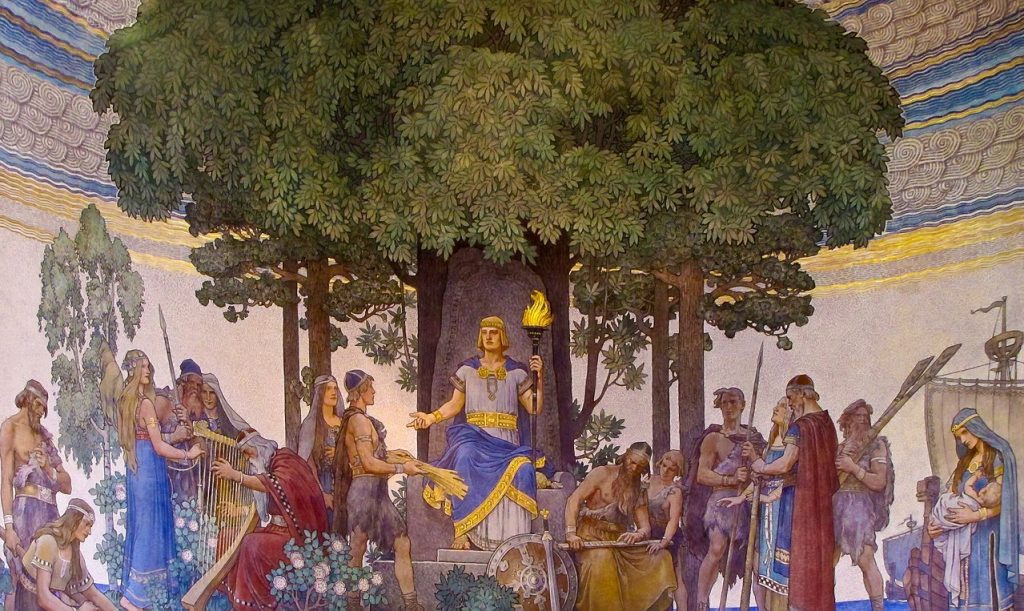
The larger layer of identity that is the nation depends on the more foundational layers in order to function without resorting to coercion. We could look at this another way, in terms of legitimacy. No doubt a polity can hold together by top-down force, but this is inefficient and therefore maladaptive. So much energy (whether spiritual, economic, or indeed ultimately even caloric energy) is spent managing ephemeral problems that the society loses the adaptive advantage of acting as a nation. Legitimacy is an inverse friction coefficient: the more legitimacy a form of life has, the more people will accept it voluntarily.
The legitimacy of a form of life is largely a function of feeling like it is ours. When something is “right full stop”, universally and in the abstract, it lacks natural force, and must be continually reinforced by inculturation. When something is ours, not only is it right, but the moral calculus reverses: ours is not seen in terms of right, right is judged in terms of for us. This—what we will call ours-ness—gives us a powerful tool to explain what seem like totally incommensurable ideas of the nation: ethnic vs. civic nationalism.
Ethnic nationalism is the least abstract form of nationalism, defining the nation primarily through the pre-political identities beneath it: family, clan, tribe, and folk. Ethnic nationalism says: the nation is an extended people. This means it does not have to invent belonging primarily through the state. The state may protect or organize the people, but the people exists prior to the state. Civic nationalism is the most abstract form, defining the nation mainly through thinner identities beyond the level of the pre-political, in terms of citizenship, law, and creed. Civic nationalism in its modern liberal form says: the nation is a community of shared values. If the nation is defined by values, why should it remain a distinct nation at all? If the values are universal, then anyone who accepts them can belong. And if anyone can belong, then the nation ceases to be a people and devolves to a proposition.
We can look at ethnic vs. civic nationalism also in terms of ours-ness. In ethnic nationalism, ours-ness comes from being of the same people: this is ours because it belongs to our inherited people. In civic nationalism, ours-ness comes from state membership or public creed: this is ours because we are citizens under the same institutions and profess the same political principles. The irony is that civic nationalism may work when it draws upon an already-existing ethnic nation, but when it tries to stand alone, it cannot hold a population together without coercion. Civic nationalism only survives by borrowing emotional force from ethnic nationalism while denying that it needs it.
Ethnic nationalism is least likely to undermine the roots of nationalism, because it stays closest to those roots. Civic nationalism is the form most likely to undermine nationalism because it detaches the nation from the pre-political identities that make nations thick. Put another way, the more civic the nationalism, the more the state must create the nation out of thin air. The healthy order is that a people makes up a nation, and the nation produces a state instrument. The civic nationalist formulation is that a state produces the category of citizenship, through which the state manufactures a nation. This is why civic nationalism is more costly, more fragile, and more coercive than ethnic nationalism.My Reaction
The United States of America has evolved from an ethnic nation to a civic nation, if nation it can be described, at all. It is more a state; a collection of diverse races, cultures, religions kept together under one polity by the coercion of the state and ruled by oligarchs.
-
No SAVE Act for You
-
The New Beginning
-
It Must Be a Day Ending in “Day”
-
Ticked Off
Which is worse: getting alpha gal so you can’t eat red meat or not being able to afford red meat due to inflation?
Looks like meat is not back on the menu, boys.
I have a dream:

-
Israeli Celebration
-
Eat More Bacon
-
France
-
Family Court
-
Stop Being a Brain Dead Zombie
-
The Continuum of Human Belonging
Human beings have more than one identity. We may be Englishmen, yes—but we may also be fathers, sons, cousins, Armstrongs, Mancunians, Northumbrians, Europeans, white men, Indo-Europeans, Her Majesty’s subjects, and homo sapiens sapiens. Some of these identities are some near, some distant; some are concrete, some abstract.
We can place human beings on a continuum of identities. Many such continuums could be formulated, but for simplicity’s sake, let us take the following sequence:
family → clan → tribe → polis/city → folk → nation → race → empire → humanity
Right away, we notice that the nation is but one level in a broader field of belonging, not the starting point of social life and not the final possible identity. We can usefully place these identities not only on a line, but also within a series of concentric circles, as in the famous heatmap diagram.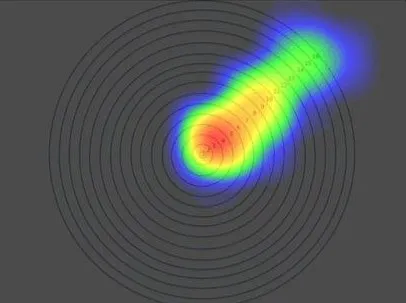
As these identities expand outward, two things happen at once.
First, scale increases. As we move from family to clan up to folk and thence to humanity, more people are bound together, and with this increased scale, greater political and military power becomes possible. We can accomplish larger and larger projects.
Second, immediacy decreases. The more people in your group, the fewer you personally know. You may still be related to them by blood, but this kinship is much weaker, and as we shall discover, it must become symbolic if it is to survive. It is impossible to be loyal to what you do not know, and it is impossible to know millions of people personally, so your loyalty becomes mediated through social institutions, and through social technologies like myth, law, ritual, language, etc.
The core principle is that the wider the identity, the more politically powerful, but the more emotionally abstract and mediated. The larger the scale of belonging, the thinner that belonging is.
Family, for example, is the deepest and most immediate identity. We encounter our family daily. It is personal to us, inherited, embodied. By the time we arrive at the city or polis, though, shared life has changed. It is still kinship writ large, but at this point people are bound together not only by blood, but by civic life—by abstractions such as office and law, and by portable identities such as citizenship. The folk is broader than the city, but usually still below the full nation. The nation is a late consolidation of these earlier forms, taking kinship feeling from family, clan, and tribe, taking civic order from the polis, and taking culture from the folk—but it scales them to a point where it can defend itself against other nations. Empire is wider than the nation as well. It may contain many peoples, or even many races across vast territory, commanding impressive military power. But its identity is thinner than national identity, so it depends on a strong state. Humanity is the widest identity, and is perhaps barely even morally intelligible.
Continue reading … Why Do We Care About Millions of Strangers?

Menu
CADD Graphics

Carolina Readiness Supply

Social Media and Websites
NC Renegade on TwitterNC Renegade on Gab
NC Renegade on Truth Social
Wes Rhinier on Gab
12 Round Blog
Barnhardt
Cold Fury
The Feral Irishman
Hammer’s Thor
Knuckledraggin My Life Away
Liberty’s Torch
90 Miles From Tyranny
Publius-Huldah’s Blog
Smoky Mountain Myco
Straight Line Logic
The Tactical Hermit
Western Rifle Shooters Association
Recent Comments
I thought the Revolution would not be televised? Mc
For once I am in 100% agreement with you. I also believe that is what’s coming.
A Color Revolution expects setbacks and prepares responses. They have basic control of the courts so arrested members for seditious…
Here’s an X link to another person digging into the same type of coup information. https://x.com/Ray_Dio_man/status/2114591686815088668?s=20


Lets say worst case scenario…some kind of “One Second After” event or just a crippling hack on the grid… Most…