
by E.M. Burlingame
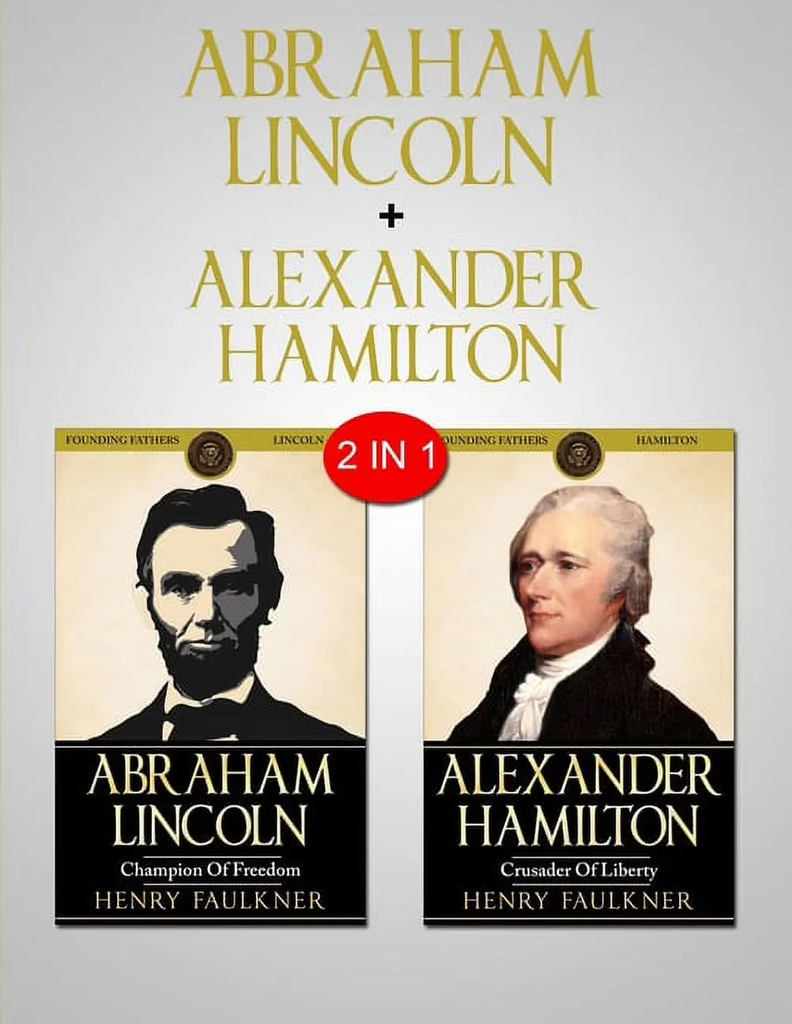
This is an unpopular opinion I am reluctantly coming to more and more—namely, that Hamilton and Lincoln were working for the City of London and were, in fact, bad guys, traitors to the Republic even:
Look at the actions and the structures they left standing. The official stories emphasize necessity, patriotism, and later success. The ledger of what they actually did, and what those acts produced, is different.
Hamilton’s program was not abstract theory. He funded the Revolutionary and Confederation debts at (or near) par, assumed the state debts, and created a class of public creditors whose fortunes were now tied to the federal government’s solvency and expansion. Speculators who had bought the paper cheap from original holders—often soldiers and farmers—were made whole. He then chartered the First Bank of the United States on the Bank of England model: privately directed, government-linked, issuer of notes, fiscal agent. He invoked implied powers to get it done. He pushed tariffs and a Report on Manufactures that treated industrial development as a national project requiring federal direction.
The immediate results were creditworthiness and liquid securities markets. Foreign capital, much of it from London and Amsterdam, flowed in. New York began its rise as a financial center. The longer results were a permanent funded national debt treated as an instrument of state power, a banking system that concentrated influence among a relatively small group of urban financiers, and a federal government with the fiscal machinery to act like a European great power. Jefferson’s agrarian, state-centered republic lost the economic contest. The “national blessing” of funded debt became the template. Later central banking, from the Second Bank through the National Banking System to the Fed, sits on that foundation.
Lincoln’s actions completed the shift. He used war to prevent secession and then used the war’s emergency to enact the National Banking Acts. National banks were required to hold U.S. bonds as the basis for their note issue. A prohibitive tax was placed on state-bank notes. The old decentralized state-banking system was subordinated or crushed. Greenbacks introduced government-issued fiat. Protective tariffs were raised and kept high. Massive federal land grants went to railroads. An income tax and internal-revenue machinery appeared. The Southern planter class—the last major competing power base of landed wealth and state-sovereignty claims—was broken by invasion, emancipation without compensation, and Reconstruction.
What followed was not restoration of the pre-1861 compact. It was a more centralized fiscal-military state, a national currency and debt market, and financial power increasingly routed through New York. The National Banking System created a reserve hierarchy that funneled funds toward Wall Street. Panics continued (1873, 1893, 1907), but the architecture now favored national banks and federal debt. The political economy that emerged was industrial, protectionist, and credit-based. The Jeffersonian/Jacksonian alternative—limited federal power, state banking, low tariffs, agrarian weight—did not recover. By the Gilded Age the United States was operating as a Hamiltonian commercial republic. The later Federal Reserve was an evolution, not a rupture.
The City of London connection is structural, not a spy novel. The techniques Hamilton copied—funded debt, a privileged bank of issue, a market in government securities—were British. Early American credit depended on European (heavily British and Dutch) buyers. After 1865 British capital financed much of the railroad and industrial expansion that the new national system enabled. The United States adopted the playbook, scaled it, on behalf of the City of London. That is how financial systems actually own and control all: by imitation of working machinery and by capital flows, not by secret commissions.
Both men died before the full settlement was visible. Hamilton was killed in 1804 while Jeffersonians still held the presidency and the system remained contested. Lincoln was killed in 1865 as Reconstruction and the Gilded Age industrial-financial order were only beginning. Martyrdom made it easier to treat the new structures as sacred rather than as the product of specific policy choices that transferred power from states and landed interests to the federal government and its allied financiers and industrialists. Reputation campaigns built on the story of a martyred man were proliferated by British-backed publishers and press, both direct to the public and through control of schoolhouse curriculums.
The Revolution’s political independence was real. The financial and federal order that replaced the old republic of relatively sovereign states was Hamiltonian, then Lincolnian. That is what the actions produced. And now our masters seek to not restore to us what our Founding Fathers gave us, but to refinance this imperial system embedded by two dead men and many others since.
And this: Stop looking at what the official histories say and start looking at what actually happened. The two are rarely the same. Our enslavement is in what happened, not in what has been written about it. PsyOps did not begin in this century or the last. They began long ago.
14 responses to “Hamilton and Lincoln the Were Bad Guys?”
Lincoln sentenced 600,000 Americans to death in the War of Northern Agression. He did not have to go to war, it was the unions war on Soveriegn States who created the union to begin with.
He printed FIAT money to pay for it
The Articles of Confederation was far superior to our Constitution!
I have always ranked Lincoln as the worst president in our 250 year history.
[…] https://appalachianrenegade.com/2026/08/22/hamilton-and-lincoln-the-were-bad-guys/ […]
FWIW, the book HOLOGRAM OF LIBERTY by Kenneth Royce explains the behind-the-scenes manipulation of the Constitutional Convention by Hamilton. Charles Beard, a professor at Columbia University authored THE ECONOMIC INTERPRETATION OF THE CONSTITUTION which got him in a lot of trouble when he showed how the document was designed to pay back the debt to (((European Banksters))). Doctor Thomas DiLorenzo authored THE REAL MISTER LINCOLN and HAMILTION’S CURSE.
All of these works document the hidden, nefarious agendas of Lincoln, Hamilton and others. I would wager there are only a handful of academics out there who would have the moral and intellectual courage to expose their students to these truths. Sad.
This. Been saying the title to this article for the last 30 years. Vast majority of people (and sadly far too many southrons) are too insuient to care.
https://substack.com/@rebelmadman
RBN radio is listener supported, truth needs help. Michael is interviewing Liberty survivor today actually. All your taught is fake, gay and a friggin lie…..all of it!
Mc
Great observations. Thanks!
comforting to see I wasn’t alone in this thinking as yes, it’s an unpopular opinion in narrative huffing statists.
We are a growing club!
.. and what TRIBE does all that circle back to? Why, Mayer Amschel’s boys of course!
What politicians are good guys? Only the least qualified choose to be a full time politician. “I’d rather be governed by first 2,000 names in the phone book…” – William F. Buckley
“I am apprehensive, therefore—perhaps too apprehensive—that the Government of these States may in future times end in a monarchy. But this catastrophe, I think, may be long delayed, if in our proposed system we do not sow the seeds of contention, faction, and tumult, by making our posts of honor places of profit.”
Ben Franklin
“When the righteous are in authority, the people rejoice; but when the wicked beareth rule, the people mourn.”
― W. Cleon Skousen
Legislation in Violation of God’s Natural Law Is a Scourge To Humanity”
― W. Cleon Skousen
Yes.
But they were just the product of the times and the people of the times. If not them, it would have been someone else.
I’ve long regarded Lincoln as a real bastard, and consider his presidency to be the true ruination of the originally intended republic. I have not looked so closely at Hamilton, he seems to exist in the shadow of Lincoln – despite apparently espousing much of the same political views – who has a much higher profile, historically speaking. I suppose I have some reading to do.
I had not connected it before, but the War of Northern Oppression was primarily fought due to the oppressive tariffs the Yankees put in place to enrich their region. Hamilton was key to have these in place, then the evil of Lincoln to keep the oppression in place by killing as many people as possible.