
Roth Note: This post is for those who study Scripture deeply, not for the average church goer who will likely find it distasteful. After reading this I asked myself, what if Yahweh really is one of the sons of the Supreme God – Creator of All and only just the god of Israel, not the god of all nations? For me, that would explain a lot …
I’ve heard about Russell Gmirkin’s work for a few years, but it is only very recently that I decided to give it a try. What I had heard of his theories sounded so extravagant that I had assumed it couldn’t possibly be serious scholarship. Well, I can report that it is serious scholarship. Cutting edge, and groundbreaking. I became so absorbed that I read his three books in a row, took notes, and will now try my very best to give you an overview. The material is so rich and the implications so vast that I will need two parts for his first book, and two parts for his other two books. Gmirkin’s work turns the spotlight on what has been, for two thousand years and some, the most successful of all Jewish adaptative strategies, and the mother of all others.
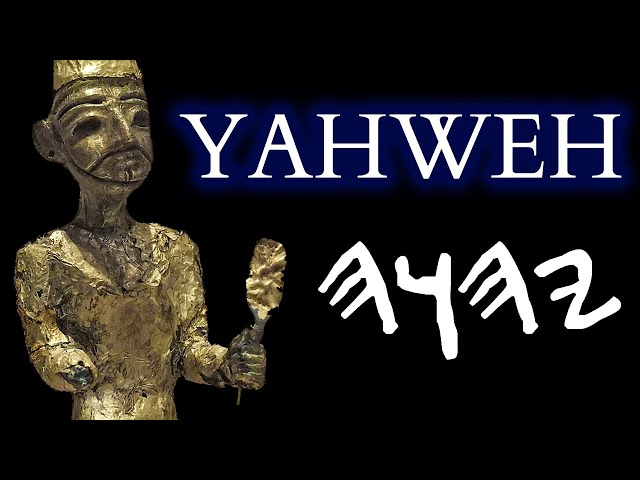
The original Deuteronomy 32:8–9 casts Yahweh in the role of one of the sons of El, here called Elyôn. Each of El’s sons receives one nation, and Yahweh receives Israel. According to Old Testament scholar Mark S. Smith, author of The Early History of God (first published in 1990), this reflects an ancient conception that was not specific to Israel, but echoes an ancient theology of the Near East. Some of the Ugaritic texts written in northern Syria in the 13th and 12th centuries bc, and discovered in 1928, call the supreme god El, and the other gods “sons of El.”
Because the Abrahamic religions define themselves as monotheism, they define the religions they supplanted as polytheism. This is a polemical perspective that historians are now challenging. Two collections of essays have recently been devoted to “pagan monotheism”, published respectively by Oxford UP and Cambridge UP.[6] John North writes in One God: Pagan Monotheism in the Roman Empire: “throughout the classical period and far earlier in the Near East, monotheistic assumptions are quite commonly found, without apparently raising any fears of weakening polytheistic practice.”[7] Such a concept of the divine realm as a “family of gods” (a cosmic god and his terrestrial offspring), or as one God in multiple forms, may be called “inclusive monotheism”, and contrasted with the Jewish “exclusive monotheism” that rejects the existence of any god but the supreme God. As we saw above, that exclusive monotheism is the result of promoting “Yahweh the god of Israel” to the throne of the supreme creator of heaven and earth. The jealous god ends up negating the very existence of all his competitors, thereby affirming that he is the only real god, and is therefore God. Yahweh’s promotion is an usurpation, however, in the sense that the supreme God is now regarded an a personal and rather crude entity with an exclusive love for one particular people. Jewish exclusive monotheism, therefore, is in reality a pathological form of polytheism: the cult of the ethnic god who thinks he is God.
My French Catholic Bible (published by the Dominicans of the École Biblique de Jérusalem) adds a footnote to that passage, saying that Rahab’s “profession of faith to the God of Israel … made Rahab, in the eyes of more than one Church Father, a figure of the Gentile Church, saved by her faith.” I find this footnote, likening the Gentile Church to the whore of Jericho, emblematic of the true role of Christianity. For it is indeed the Church that, by acknowledging the god of Israel as the universal God, introduced the Jews into the heart of the Gentile city and, over the centuries, allowed them to seize power.
10 responses to “Yahweh the Son of El”
It’s really difficult to consider this “serious scholarship” when they can’t even get God’s name right from the very beginning. Not sure if I can post links to videos, but the following is an excellent explantation of what we do, and do not know, about the proper pronunciation. This is what serious scholarship looks like.
https://www.youtube.com/watch?v=5UP0cvsM2Yk&t=2s
Right. No W in Hebrew, only V. Written in stone far older. Elohim (angels) became gods to the nations, both before and after, Noah’s flood. Hebrews came only from Shem, Jew is a later mongrel term. Cain’s tribe allied with them all.
These fallen elohim are coming back to a confused humanity.
There are many Elohim, there is only one Elohim Yahweh. ~ Dr. Mike Heiser
An interesting take on the Old Testament. Or you can go with the theories of one Clif High who says the the El were an ancient race of space aliens with Elyon in charge and Yaweh some minor officer in charge of the Jews. There is a lot more to that story line. Suffice it to say that modern humans were the result of genetic manipulation by space aliens according to Mr. High.
Actually Roth, could you give us the genealogy of “Woden” please.
Since you’ve chipped away at the Christan God again?
Remind me about your “I don’t care if your Catholic and so” on stuff.
And the “For my Christian Friends”.
Please explain with crayons since I am not such a learned man as yourself how your “Informational” posts create UNITY between Patriots?
Another disappointing and divisive post by Roth. I have no idea why David relies so heavily on him. Most of the content and ideas that David shares are sound and thoughtful.
As you alluded to, Roth appears to be straddling the fence of not offending Christians, while promoting everything that attacks or undermines its foundations and teachings.
It’s especially offensive when he claims to have been a follower of Christ at some point in his life.
John 14:6 Jesus answered, “I am the way and the truth and the life. No one comes to the Father except through me.”
There is no middle ground. Either you believe that Jesus Christ is the son of God and accept His sacrifice for your sin or you don’t. Either you believe scripture is the word of God or you don’t.
None of this talk about tribes, customs or heritage (much of which is valid and thought-provoking), supersedes this foundational decision and truth.
It’s sad to see someone that once claimed to be a Christian, attack the faith they once followed. But to do so while at the same time claiming he is not.
At least, that is my interpretation. You can decide for yourself.
Rick, You are correct. I’m making an attempt to not to offend my Christian friends. I say friends because I don’t want to be an enemy. We’re all in this together. Often, comments here promote Christian Scripture and promote the Christian faith. I have no issue with that, but if you can promote your faith, why cannot I at least provide an alternative view? I understand that some Christians are so zealous that they cannot abide anyone who doesn’t believe as they do. More’s the pity.
As for divisive, “the Christian doctrine of having an answer for one’s faith is rooted in 1 Peter 3:15, which commands believers to be always prepared to give an answer to anyone who asks for the reason for their hope. The term “answer” is translated from the Greek word apologia, meaning a verbal defense or reasoned argument, which is the etymological origin of the discipline known as apologetics.”
So, when I post things that question your faith, should you not consider them with an open mind and do just a bit of study before refuting them? Would that not strengthen your faith? A reasoned argument would be better than just telling me to shut up or have me censored. What are you so afraid of that you want to sensor anything with which you disagree?
Roth,
Thank you for the thoughtful and respectful acknowledgement of my comment.
I certainly don’t consider you an enemy either.
I am quite familiar with the meaning of the Greek word apologia. I am well studied and credentialed, but I don’t lean on that when engaging someone with a different point of view.
You haven’t posted anything that makes me question my faith. My intent was not to present a lengthy, well-reasoned argument, nor was it intended to shut you up or sensor you. And I certainly don’t fear opinions that I disagree with.
I simply stated my opinion about what I perceive to be an attack on Christianity, without fully disclosing that intent.
We are all entitled to our opinion. And that is mine.
As I said in the last line of my original comment, “At least, that is my interpretation. You can decide for yourself.”
Michael, There you go again. Snarky comment. If you are really serious about learning something new I’d love to have a conversation with you and would be happy to answer your questions, but you’d have to drop your sour demeanor.
As for ‘chipping away at the Christian God,’ I believe the God in question is the God of Israel. Prove me wrong.
Roth, SNIP Often, comments here promote Christian Scripture and promote the Christian faith. I have no issue with that, but if you can promote your faith, why cannot I at least provide an alternative view?
We get to post a scripture or three.
Glad you’re so tolerant of us.
YOU post Multi-paragraph AI generated beautiful pictures advertising the glory of the “Old Way”. Nearly EVERY DAY, some days more than one large post.
You swamp this site compared to Davids informational postings.
You post extensive proof of your beliefs WITHOUT Footnotes so we mere untrained NOT TOP Graduates of a “Noted Christian College” and War College Professor cannot disprove any of your Narrative.
I recall you referred the Appalachian people as “Your Folk”.
Please wander over to a few of the Baptist and Congregationalist Churches there and teach them about “Yahweh the Son of El” and the good news (gospel) of Woden.
Let us know how they welcome your Old Faith please.
Paster Bob needs some pulpit time there.