We are taught that history is linear progress, but it’s cylical
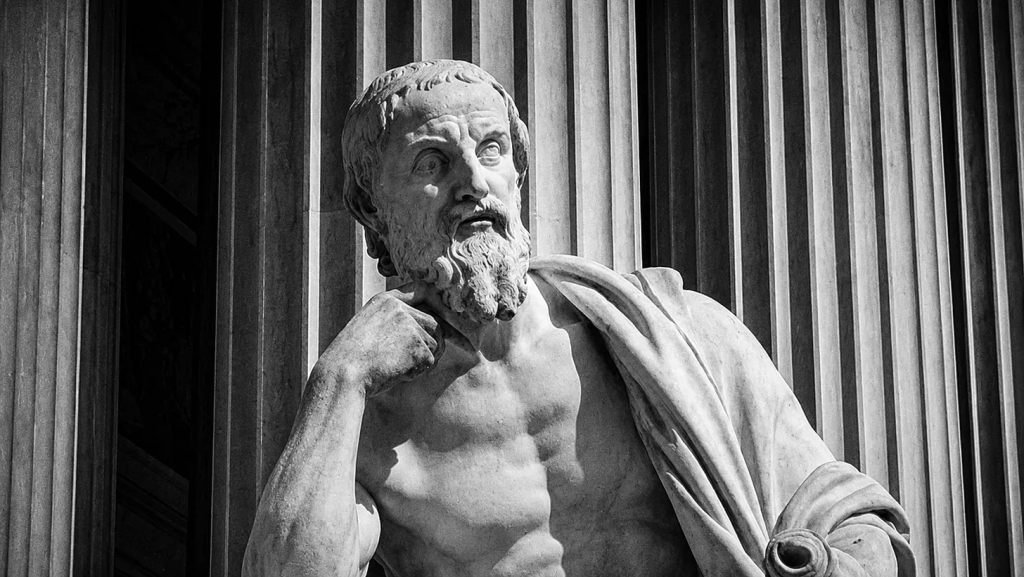
Note: We can learn a lot from old dead white guys.
Twenty-two centuries ago, some Greek bloke called Polybius was hauled to Rome as a hostage, and he spent his captivity studying the place, not as a tourist, but the way a doctor studies a patient he already suspects is dying.
His conclusion was that no form of government lasts. They turn into one another, in order, like a wheel coming round.
The men who win a thing know what it cost, because it cost them. Their grandchildren are handed it for nothing, and nobody values what they were handed for nothing, so they spend it. The rot is that forgetting.
Some medieval Arab judge named Ibn Khaldun spent his life watching hard desert tribes conquer the soft cities of North Africa and then, within a few generations, go soft themselves and get conquered in their turn.
He had a name for the thing that held the conquerors together: ”asabiyyah”. It’s the loyalty you only get out of people who have starved and bled beside one another. Hardship makes it, and then comfort eats it.
He even put a clock on the decay: about four generations from the founder, who remembers, to the great-grandson, who looks at the whole inheritance and assumes, in Khaldun’s phrase, that it “was not built through effort” — that it had simply always been there, like the hills, and that one lets it slip.
A dying civilisation does throw up its strong man, Spengler granted. The chaos becomes unbearable, and somebody grips the wheel.
But that man may not be the cure. He’s perhaps the last symptom of the rot.
2 responses to “Winter Is Coming, and No Election Can Stop It”
A philosophy much like The Fourth Turning, which we are experiencing today. Trump being the strongman or Grey Champion (as in Strauss and Howe’s reckoning). What ever we end up with when the dust settles it will not be the same USA we once knew. I’m hoping for a new united States with a Constitution that reflects lessons learned.
You outdid yourself Roth. Very good study of history. That was interesting on the white horses.