

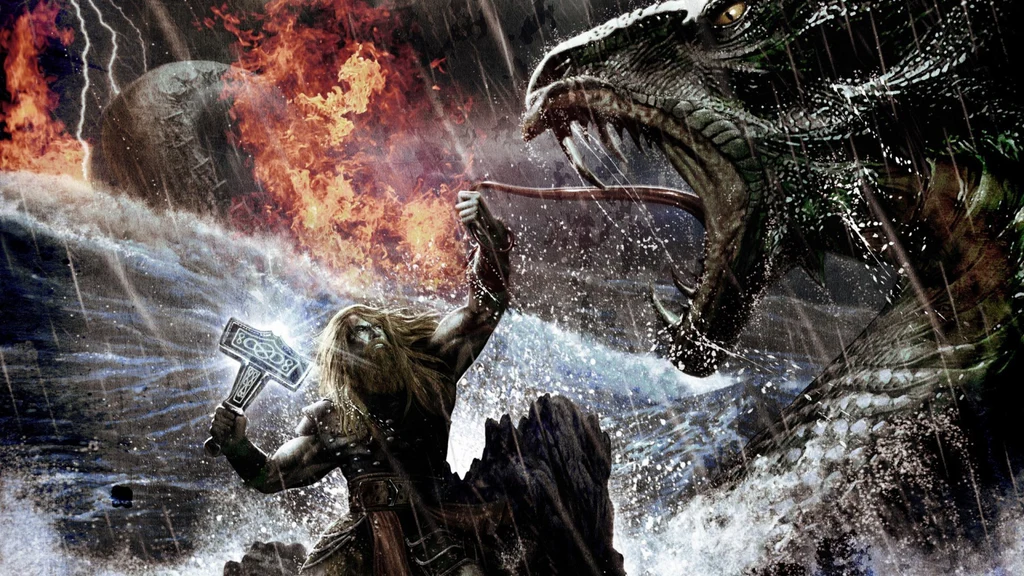
In Egyptian mythology there are two serpents, Atum and Apophis, one to create out of chaos, the other to return to chaos. Germanic mythology offers a similar idea in the struggle between Thor/Donar (order) and Jormungandr (chaos). In our day, we wonder why the Left and most third-world invaders seem determined to destroy our civilization. To take and to destroy. Why white people, who have built ordered Western Civilization, are being systematically replaced by those who sow chaos. Burlingame recognizes this struggle as an eternal war. He writes:
The Two Classes: Resentfuls and Responsibles
Humanity’s divided into two hereditary, genetically coded classes (roughly half the population, with the other half being the malleable masses in the middle, the Adoptables):
Resentfuls: Motivated by deep-rooted envy, leading to malevolence. They see the world as inherently unfair and seek power through control, coercion, deceit, and destruction of systems. Their compulsion is to enslave and consume Adoptables while waging total war against Responsibles and the Game itself. They view relationships as zero-sum power struggles.
Responsibles: Motivated by deep-rooted gratitude, leading to responsibility. They accept the world as it is — difficult and complex — and seek to sustain and expand the Game through innovation, collaboration, and mutual benefit. Their compulsion is to draw more Adoptables into skilled, sustainable participation in the Game.
Adoptables (the pivotal ~50% of any population) aren’t hardwired to either side. They’re the battleground. Resentfuls seek to radicalize them into resentment and dependency; Responsibles seek to empower them through gratitude, relationships, and upward mobility. Adoptables’ alignment determines whether the War or the Game dominates at any moment. They’re also the primary source of raw, real-world innovation born from the necessity of surviving.
Doctrine alone doesn’t win battles. Lines of Effort (LoEs) translate principles and rules into actionable, context-specific strategies at strategic, operational, and tactical levels.
- Resentfuls have long operated from Saul Alinsky-style LoEs: power from money/people, ridicule as a weapon, make the enemy live up to its rules, etc.
- Responsibles must develop and adhere to their own explicit LoEs: emphasize relationships over money, deny psychological warfare tactics, restore forgiveness and Classical Liberalism, evolve the Game rapidly in a virtualizing world, etc.