
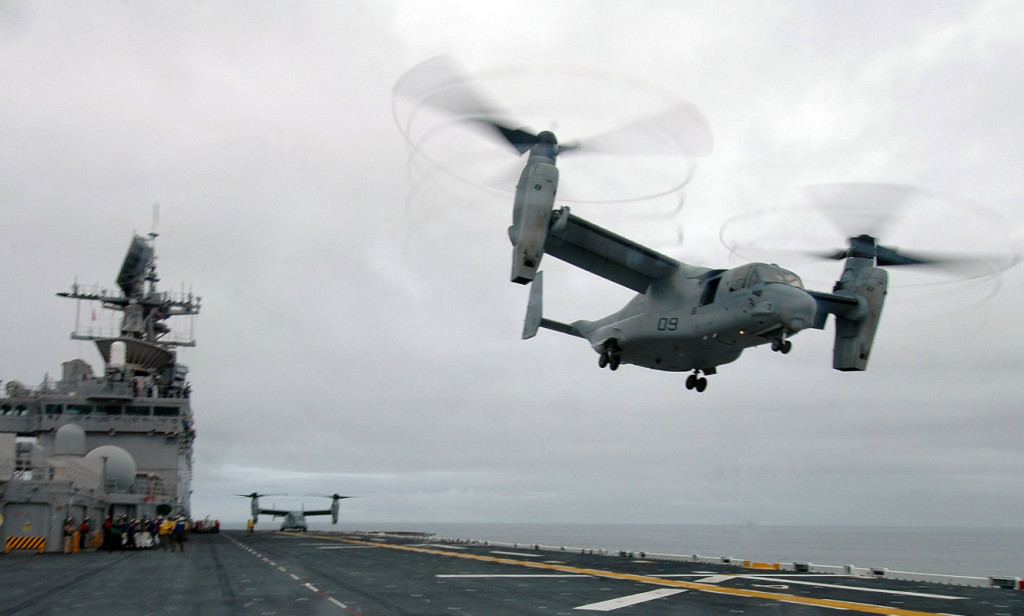
Since the infamous Millennium Challenge 2002 (MC ’02) concept-development exercise, run by the now-defunct U.S. Joint Forces Command (JFCOM), was leaked in the press 13 years ago, strong opinions have been expressed about its failure and lessons. When it was conducted, this exercise was the most ambitious and costly military simulation in American history. It pitted the U.S. military (with capabilities projected five years into the future) against a nameless potential adversary (Iran), with outcome intended to inform future strategy and procurement decisions. Controversy immediately arose when the opposition force, or red team, learned that the results were scripted to assure that the U.S. forces would win. Writing in September 2002, New York Times columnist Nicholas Kristof warned that it “should teach us one clear lesson relating to Iraq: Hubris kills.” (In that same column, Kristof admitted “I’m a wimp on Iraq: I’m in favor of invading, but only if we can win easily.”) MC ’02 was later popularized in Malcolm Gladwell’s 2005 book, Blink: The Power of Thinking Without Thinking, where the leader of the red team opposition force (OPFOR), retired Marine Corps three-star Paul Van Riper was praised for having “created the conditions for successful spontaneity” with a decision-making style that “enables rapid cognition.” More recently, a Marine Corps Gazette essay proclaimed that “JFCOM controllers changed the scenario” of MC ’02 and that the command “failed to understand the utility of the exercise and the feedback it provided.”
…
At the start of MC ’02, to fulfill the forced-entry requirement, blue issued red an eight-point ultimatum, of which the final point was surrender. Red team leader Van Riper knew his country’s political leadership could not accept this, which he believed would lead the blue forces to directly intervene. Since the George W. Bush administration had recently announced the “preemption doctrine,” Van Riper decided that as soon as a U.S. Navy carrier battle group steamed into the Gulf, he would “preempt the preemptors” and strike first. Once U.S. forces were within range, Van Riper’s forces unleashed a barrage of missiles from ground-based launchers, commercial ships, and planes flying low and without radio communications to reduce their radar signature. Simultaneously, swarms of speedboats loaded with explosives launched kamikaze attacks. The carrier battle group’s Aegis radar system — which tracks and attempts to intercept incoming missiles — was quickly overwhelmed, and 19 U.S. ships were sunk, including the carrier, several cruisers, and five amphibious ships. “The whole thing was over in five, maybe ten minutes,” Van Riper said.
~~~~~~~~~~~~~~~~~~~~~~~
I would put real money down (silver) to wager that Trump has no knowledge of Millenium Challenge 2002. I would also wager that the defense contractors who sold Trump a new class of battleships know. What an utter waste of blood and treasure.
3 responses to “Millennium Challenge: The Real Story of a Corrupted Military Exercise and its Legacy”
The Navy, our modern military in general, do not live in the real world. Remember that old Eastwood film about the old gunny. Same applies to the 2002 operation. Todays military wizards are probably worse thinkers than the 2002 crowd.
Everything said here should be put in the hands of Tucker Carlson. I guaranteed that Trump follows Tucker, regardless of the negative press Tucker has been getting.
Someone needs to talk Trump into getting the dirty rotten neocons out of his administration, Rubio, and his cohorts Niki Haley. Mike Waltz and his wife who was right hand to Dick Cheney. Et al, who told him to pick these people.
I am praying that someone like Prof Sachs will get to him