
Hint … not demons.
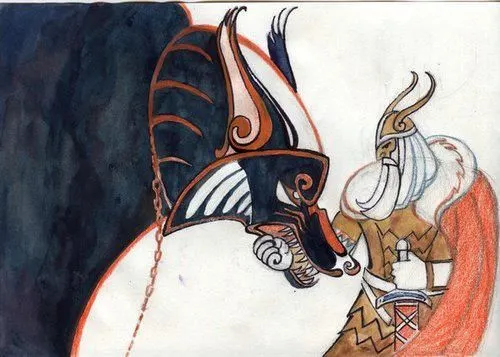
This does not require modern Christians to worship pagan gods or abandon their faith. In fact, many early Christian thinkers recognized that pagan cultures often grasped fragments of moral and psychological truth imperfectly through philosophy and myth. One can understand the symbolic power of Tyr without believing that Tyr is literally a divine being.
Although cultures differ dramatically in language, geography, and religious belief, the underlying problems of human social life remain remarkably similar. Mythology can be understood, in part, as an attempt to map these recurring patterns. The gods became symbolic embodiments of the forces and behavioral tendencies that people repeatedly observed within themselves, within their communities, and within the broader struggle to build and sustain civilization.
Modern people often misunderstand this because we inherit centuries of thinking shaped by materialism and literalism. We tend to ask whether the gods were “real,” as though the only meaningful reality is physical existence. But symbolic systems can contain profound psychological truth regardless of whether one believes the beings themselves literally walked the earth.
Even Christianity, despite its rejection of pagan worship, inherited and transformed many of these symbolic structures rather than erasing them entirely. Medieval Christians continued to think symbolically. Saints became icons of particular virtues and struggles. Archangels represented divine justice, warfare, healing, or judgment. The dragon-slayer motif survived in figures like Saint George and Michael the Archangel. The symbolic language changed, but the underlying human realities remained.
This is important because many ancient gods represented not merely isolated concepts, but tensions within civilization itself.
To the modern mind, Tyr’s domains can appear contradictory. He is associated with war, law, justice, oaths, and courage. Today we often imagine these as separate spheres. Law is supposed to restrain violence. Justice is supposed to rise above force. Courage belongs to warriors, while law belongs to judges and legislators.
But ancient societies understood something we often forget:
Law without force is merely suggestion, and force without law becomes predation.
The deeper insight embedded in Tyr is that civilization itself depends upon dangerous men voluntarily binding themselves to moral structure.
One response to “Who Are the Pagan Gods … Really?”
Excellent article and clarifies why studying ancient myths was included in my literature class in high school. Wish my teacher had explained the purpose of learning the material she presented. All makes sense now.