
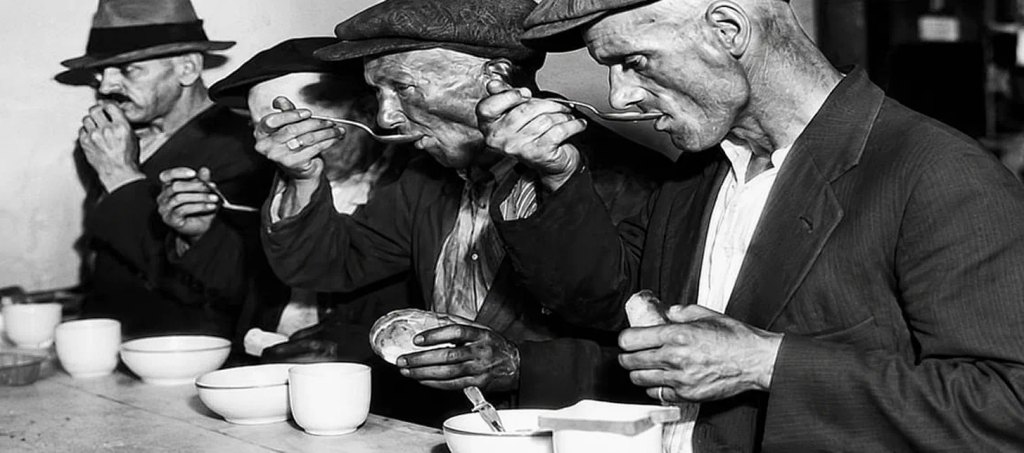
October 29, 1929, began as a Tuesday and ended as an autopsy. When the stock market shed its skin that Black Tuesday, it revealed something putrid beneath the gilt and glamour of the Roaring Twenties—the entire economic edifice had been a painted facade, a stage set propped up by speculation and debt. Within months, the iron sinews of American industry seized up. Factories that had belched smoke and churned out automobiles now stood silent as tombstones. Construction cranes froze in place, their skeletal arms reaching toward empty skies. The breadlines formed not from laziness but from the sudden, violent evaporation of work itself—fourteen million pairs of boots kicked dust on Main Street, fourteen million stomachs growled in concert.
50 Tips From the Great Depression
1. Move as a clan. When work dried up in Akron or Detroit, families packed their possessions into trucks and rolled toward the horizon like Bedouins. Staying together meant pooling resources, sharing bread, ensuring that when one member stumbled, others could prop them up. The lone wolf starved; the pack endured.
2. Follow the harvest. Migrant farm work was the artery that kept many alive. Cotton in Texas, apples in Washington, wheat in Kansas—each crop had its season, its hunger for hands. A family could stitch together nine or ten months of labor by chasing ripeness across state lines, living in tents that leaked when it rained.
3. Ask not what the job is; ask only if it exists. Pride was a luxury item, quickly pawned. Men who had managed offices took up shovels. Women who had worn silk now scrubbed floors. The work itself mattered less than the doing of it, the exchange of sweat for coins…
Conclusion
The photograph fades, but the hunger remains. We stand now at a similar precipice, staring into a future that promises uncertainty, that whispers of contractions and corrections and collapses yet to come. The machines we have built are complex, interconnected, fragile—subject to the same tremors that brought down the house of cards in 1929. We have forgotten, in our age of abundance, how thin the margin is between comfort and catastrophe, between the full pantry and the empty bowl.
Timely. History may not repeat itself, but it certainly rhymes…


Leave a Reply